Border Compliance Assistant
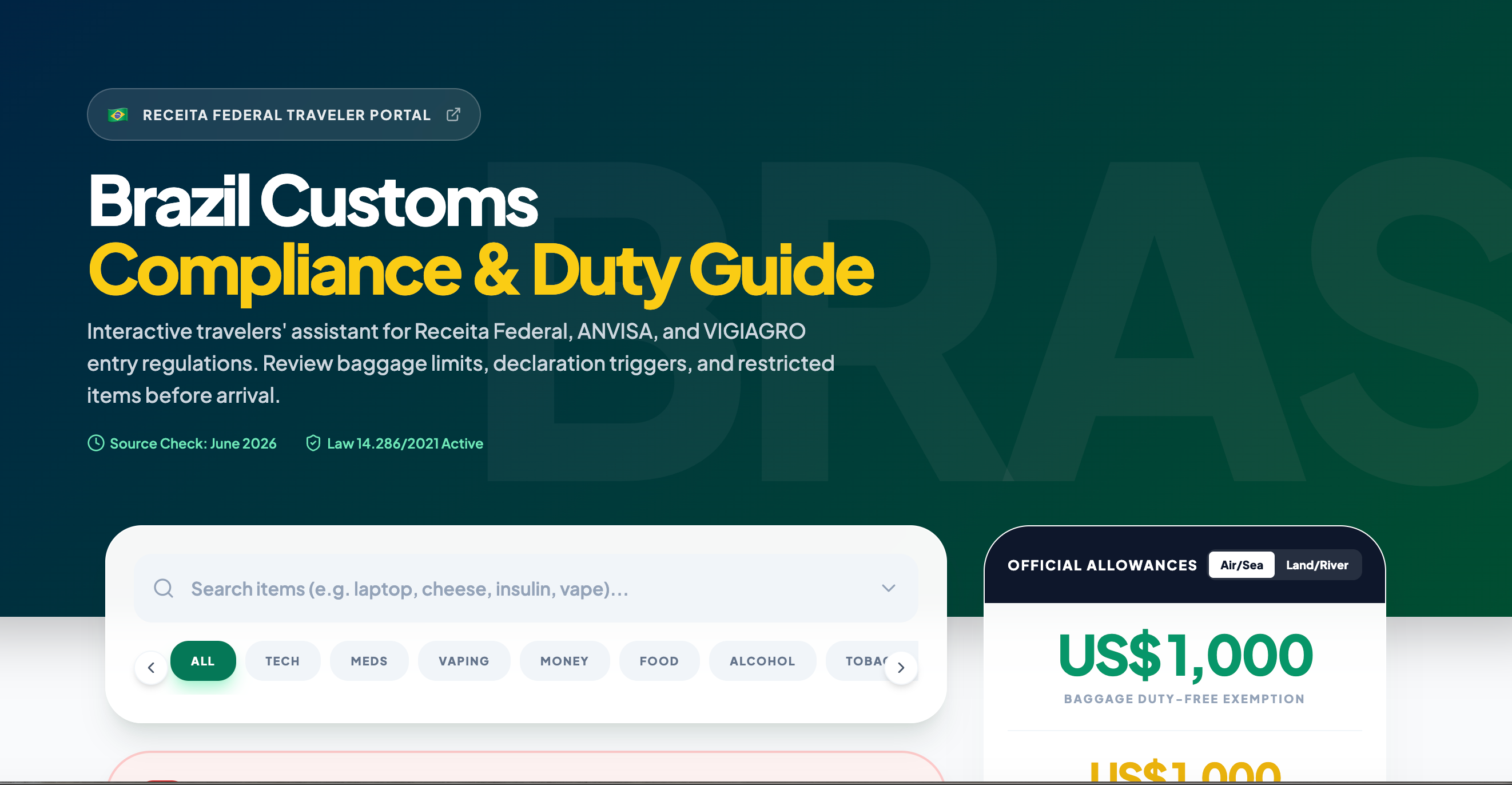
An interactive customs intelligence experience that transforms fragmented border regulations into clear traveler guidance so people can quickly understand what is allowed, what must be declared, and what should stay home before international arrival.
Gallery
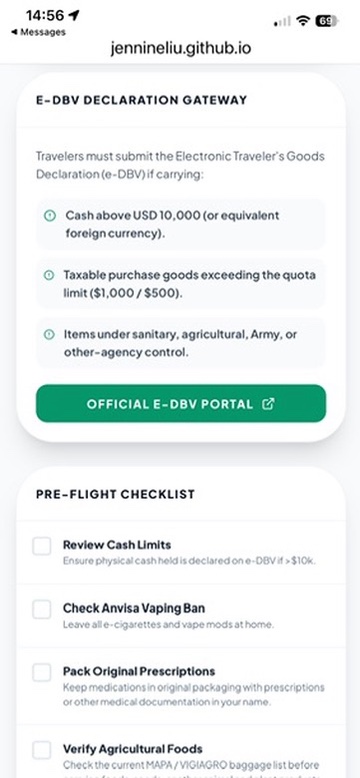
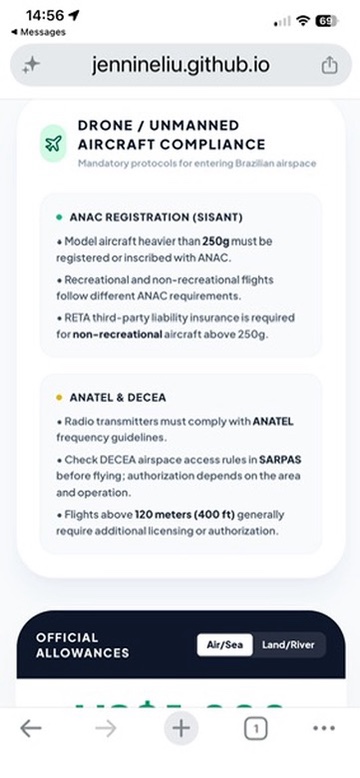
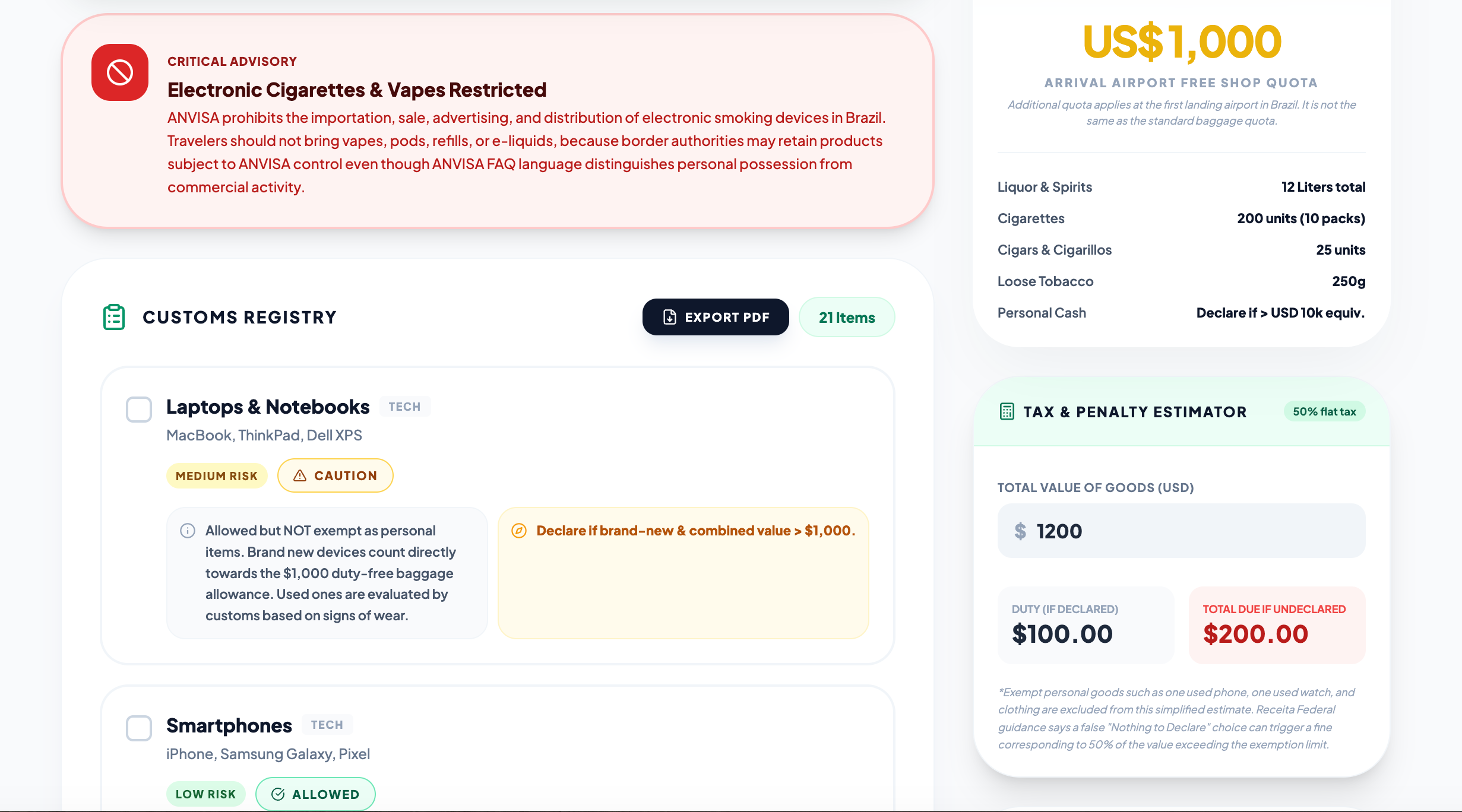
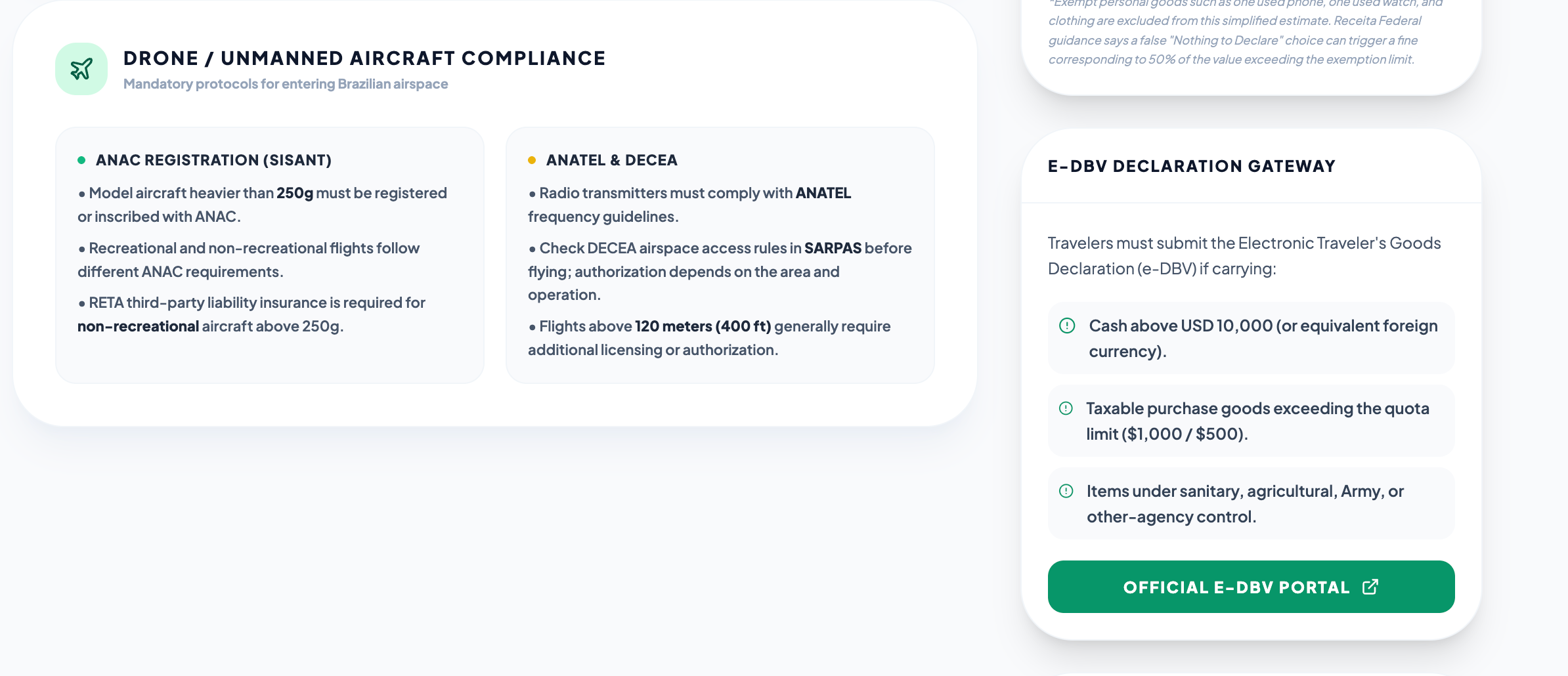
International customs guidance is accurate, but it is rarely designed for how travelers actually make decisions. Regulations are fragmented across customs, agriculture, health, and aviation agencies, then presented as legal or procedural text.
Travelers do not show up asking for a policy memo. They ask practical questions: Can I bring this? Should I declare it? Will I pay duty? Do I need paperwork? Border Compliance Assistant reframes those questions as a product experience instead of a document search problem.
- 01 Answers are spread across multiple government agencies with different terminology and thresholds
- 02 Item rules change based on quantity, arrival method, documentation, and whether goods appear personal or commercial
- 03 Travelers need fast, confident decisions on mobile rather than long-form regulation review
- 04 Declaration mistakes can create unnecessary duties, delays, or confiscation risk at the border
- 05 Trust depends on plain-language summaries that still point users back to authoritative government resources
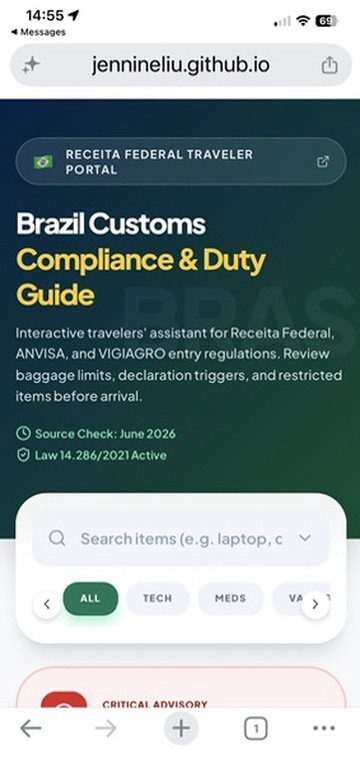
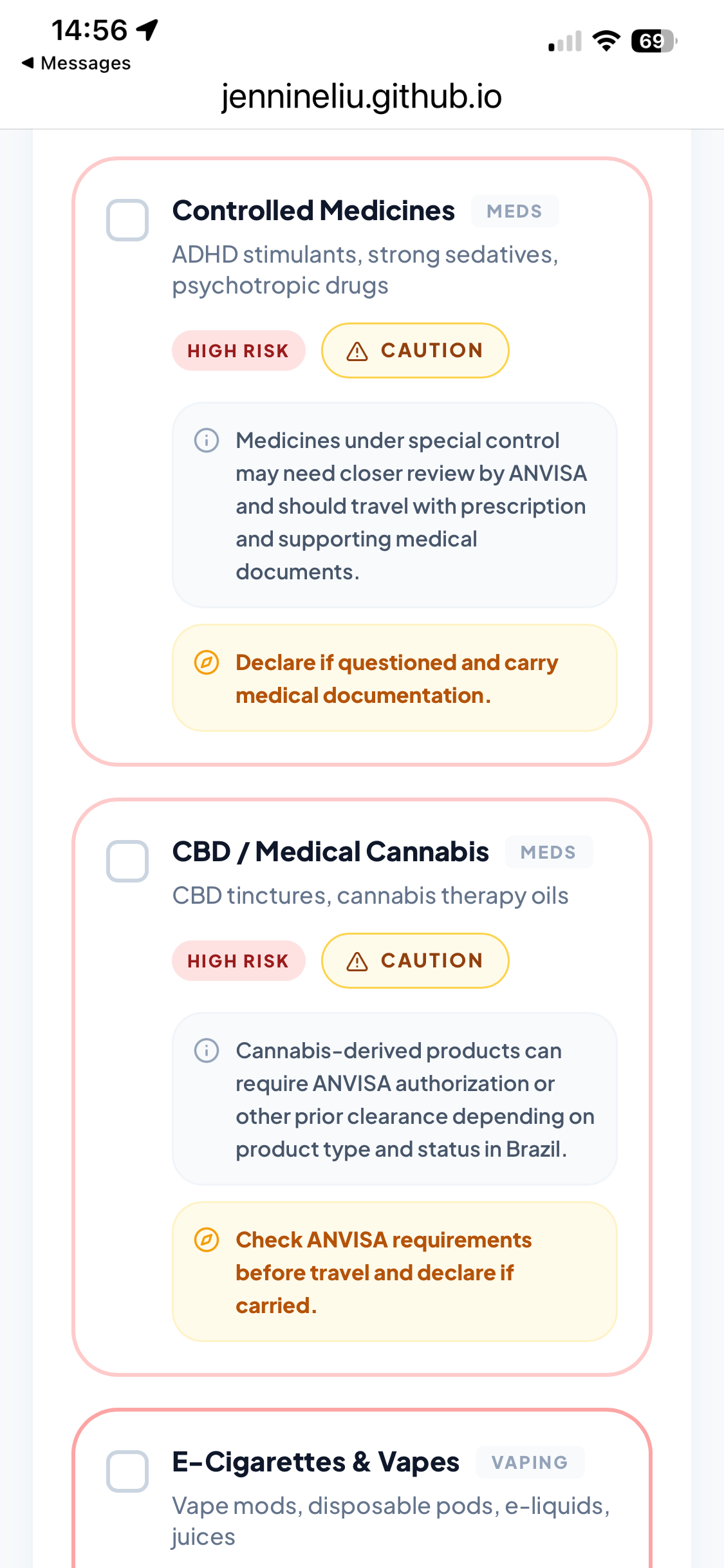
The product is designed as a traveler-first customs intelligence interface: searchable, filterable, and intentionally action-oriented. Instead of exposing users to policy fragments, it returns item-level guidance with risk labels, explanations, duty implications, and recommended next steps.
Progressive disclosure keeps the interface usable under travel conditions. A traveler can scan a registry result, open a duty estimator, review a compliance checklist, and reach official resources without leaving the flow or translating legal language on their own.
The first implementation focuses on Brazil, but the real product decision was to build a repeatable framework: country rules plug into the same interaction model rather than requiring a new UX system every time.
- Search-as-you-type customs registry
- Allowed / caution / prohibited classification
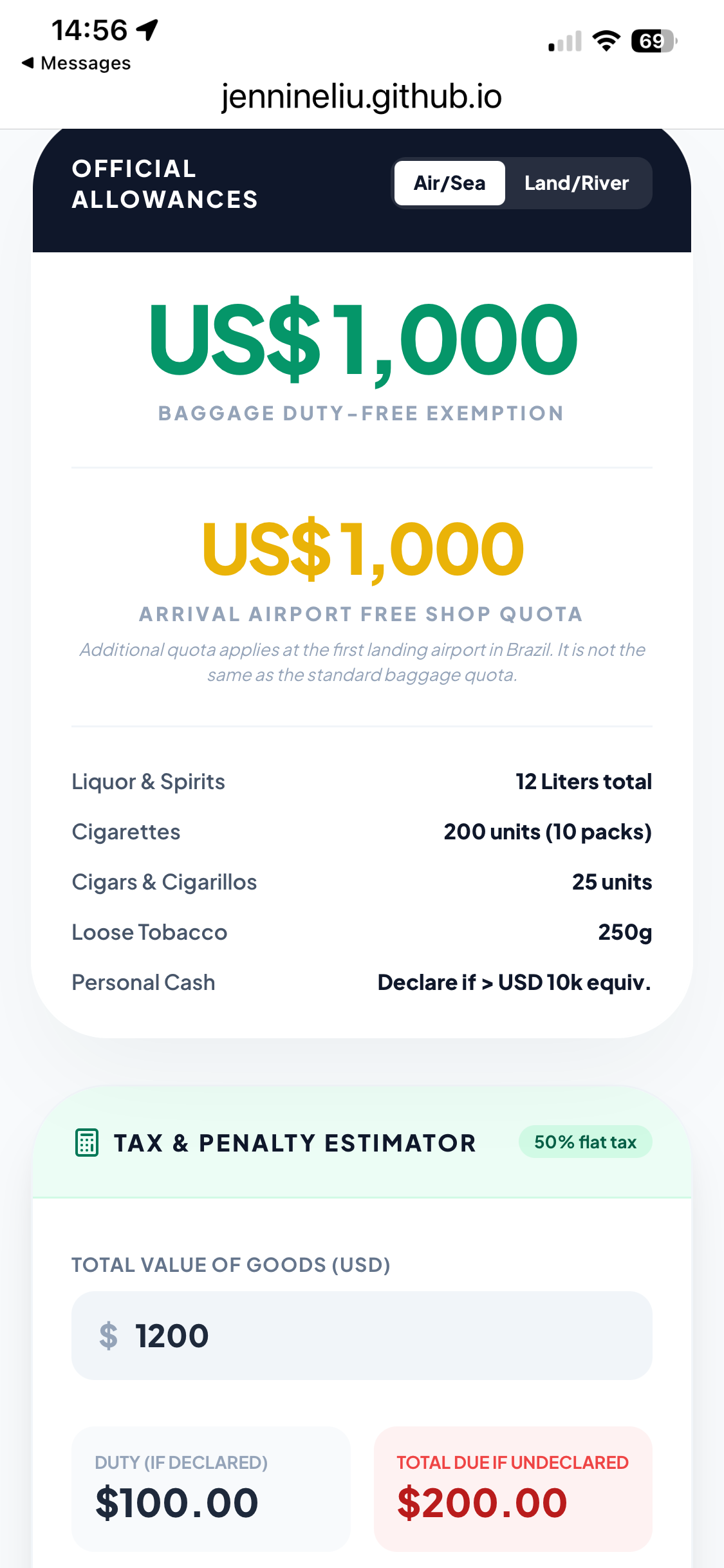
- Duty, exemption, and undeclared penalty guidance
- Arrival-specific rule sets for baggage thresholds
- Packing tracker and compliance checklist
- PDF export plus official reference links
Compliance guidance designed for fast, confident decisions.
- → Reduces the time travelers spend searching across customs, health, and agriculture sites for a single answer
- → Improves declaration clarity by turning thresholds and conditions into plain-language prompts
- → Helps users identify prohibited or high-risk items before departure instead of at inspection
- → Supports mobile, in-transit decision making for business travelers, leisure travelers, and travel programs
- → Creates a reusable product foundation for future multi-country compliance assistants and traveler profiles
"Government regulations are often accurate but difficult to navigate. This project explores how complex policy can become intuitive decision support through thoughtful information architecture and user experience design."
Project IntentThe assistant does not replace official guidance. It shortens the path to it by structuring decisions around the same institutions travelers need to verify with before departure.
- Receita Federal Customs Authority
- e-DBV Portal Declaration Portal
- ANVISA + MAPA / VIGIAGRO Health + agriculture guidance
The interface is built for the moment a traveler needs it most: on a phone, under time pressure, with a question that needs an immediate answer.
Users can start with a simple item search, then drill into risk, duties, declarations, and documentation only when those layers matter.
The product is intentionally structured around traveler actions rather than policy exposition, reducing overload without sacrificing precision.
The same framework can grow into multi-country support, traveler profiles, OCR receipt scanning, offline access, and AI-assisted recommendations.
Let's build regulated information people can actually use.
Interested in travel intelligence, AI-assisted product design, or human-centered interfaces for complex policy and compliance environments? Always open to thoughtful conversations.